

Achieve 24/7 Full-Color Surveillance with InVid Illuminate Cameras
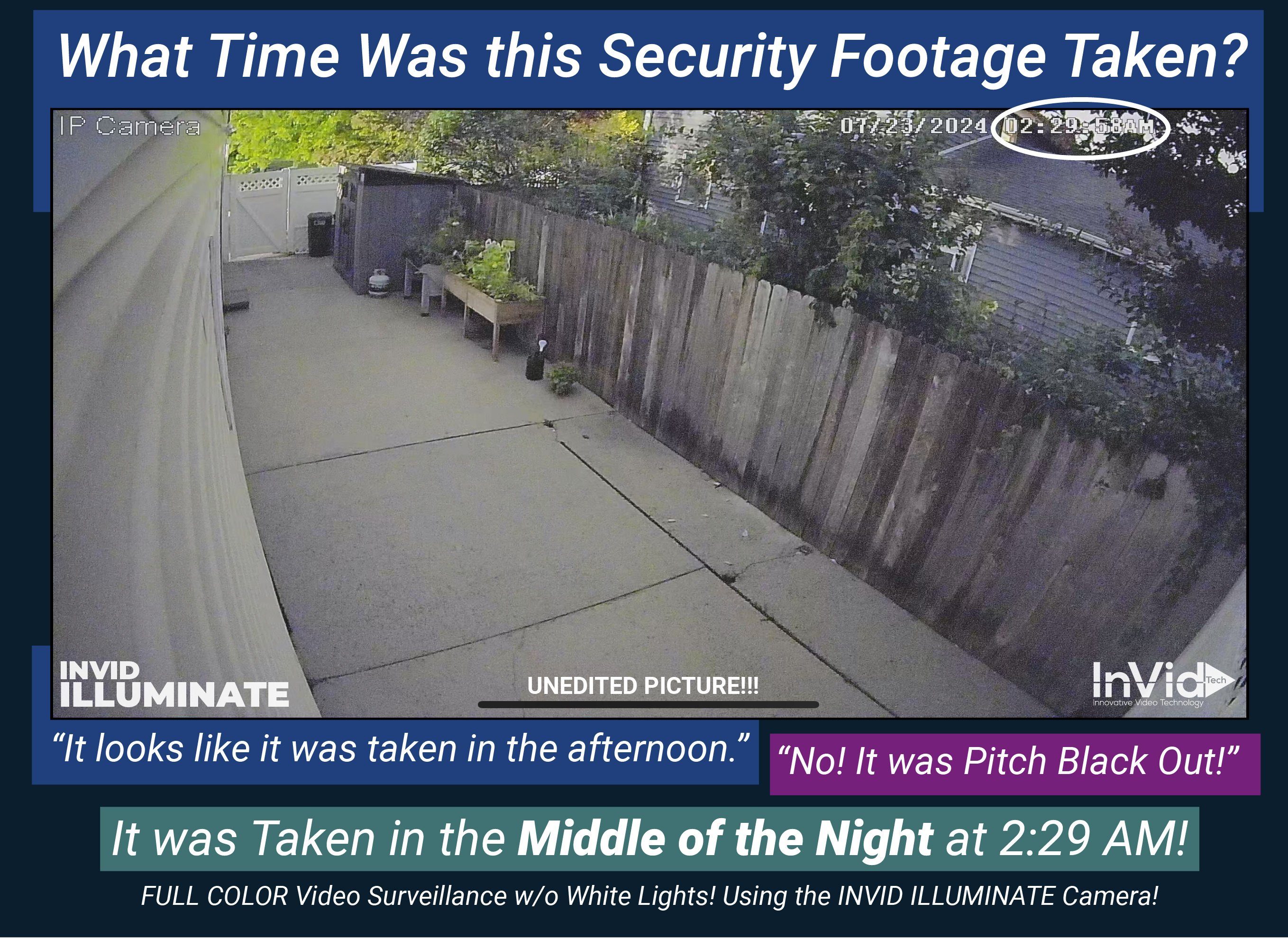
Comparison of IR vs InVid Illuminate
Comparison of Standard IR vs. InVid Illuminate This video demonstrates three different video comparisons:
- Standard IR Camera: Before upgrading to InVid Illuminate.
- InVid Illuminate: With a little bit of light in the distance (Small kitchen light 2-rooms in).
- InVid Illuminate (same camera): With zero light (Kitchen light off).
About these images: Every Illuminate image shown here is unretouched and captured on site. Illuminate works by maximizing the light that's already in the scene — moonlight, a streetlight down the block, spill from a window, a flood light in the distance. It does not manufacture light. Available light, distance to subject, surface reflectivity, and scene layout all affect the result, so expect variation from one install to the next. In a location with no ambient light at all, use the camera's built-in white light or IR. Survey the site before committing a customer to full-color night imaging.
InVid Illuminate Cameras & White Light
Why does my camera have a white light on it?
When you receive the camera, the white light is off by default. You have three options regarding the white light. The first option is automatic, which allows the camera to turn on the white lights when it gets dark. The second option is to keep the white light off, which is the default setting for the camera. The third option is manual, where you can adjust the intensity and the start and end times of the white light. Keep in mind that with the white lights off, the camera is more discreet, and the picture has a natural look with true colors. However, if the white lights are on, the colors may get washed out, and shadows may appear heavier.
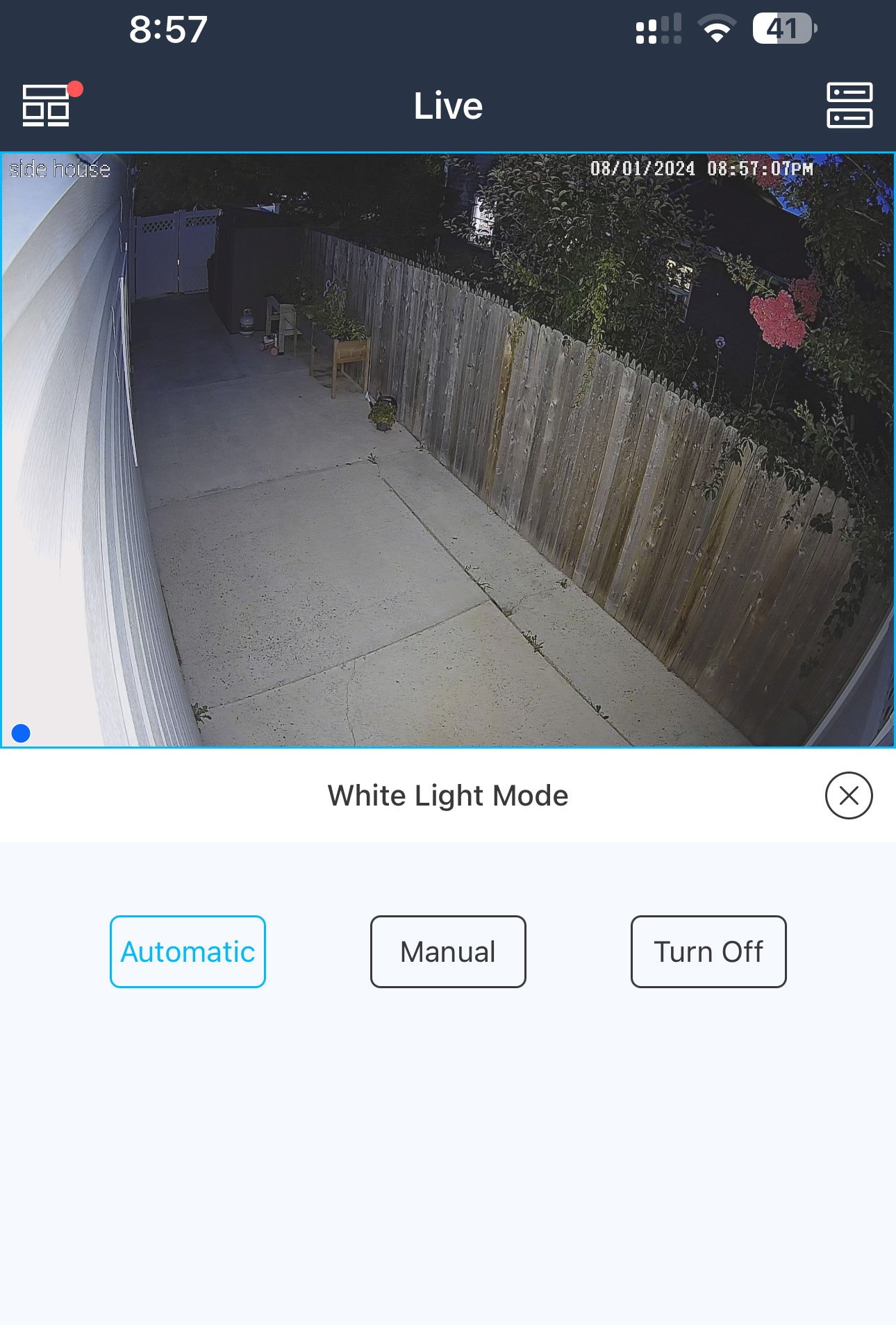
White Light: Automatic
You have the option to enable the camera to automatically activate white lights in low light conditions. Although the image remains clear, the light causes some color distortion.
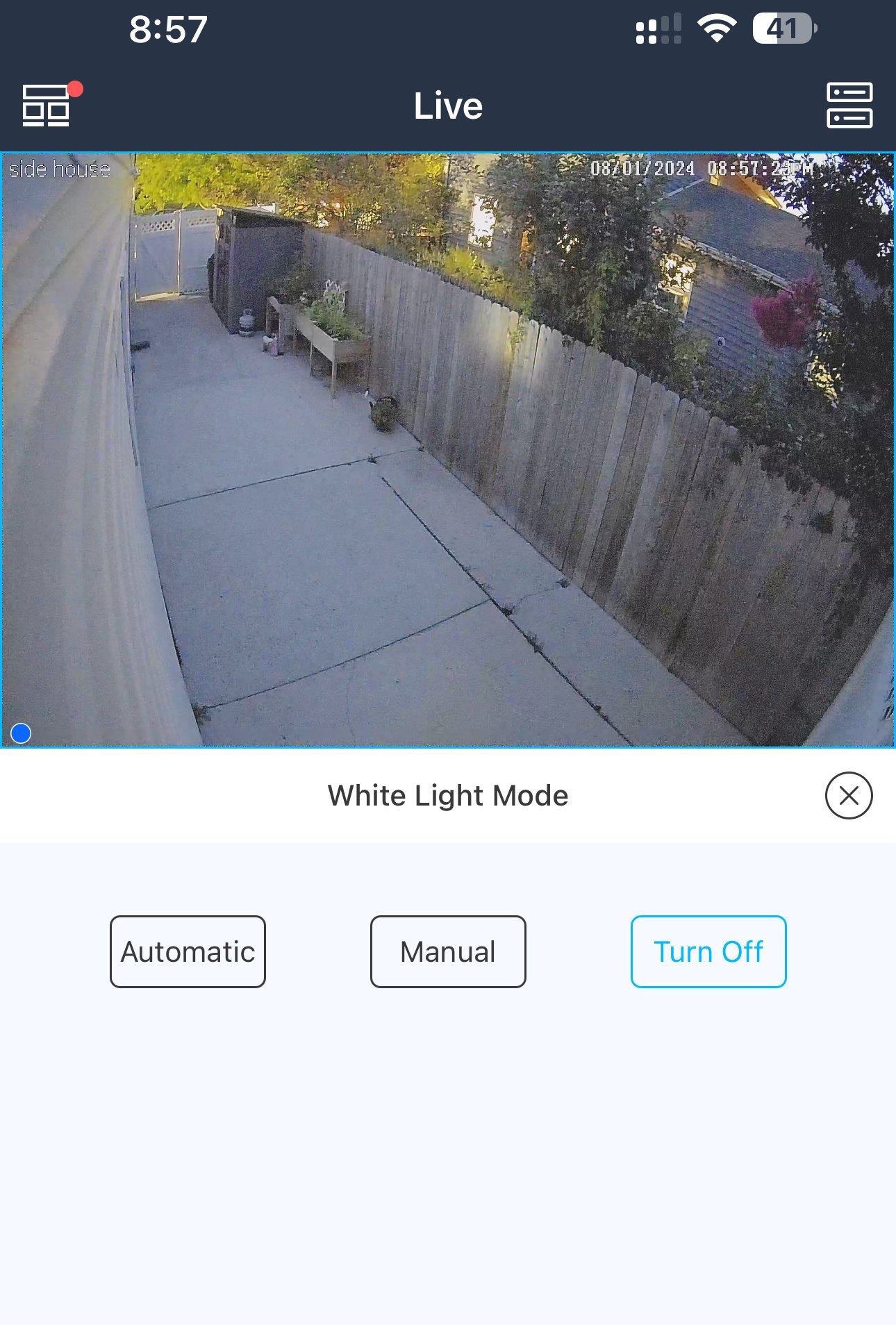
White Light: Off (Default)
As you can observe, this picture has a much more natural appearance, allowing you to discern the color of the bushes extending beyond the white fence. There is also less shadowing in the picture.
Frequently asked questions
Do I need to use the built-in white lights on some of the cameras?
How Much Light do I need?
Are these cameras NDAA Compliant?
How Much Light do I need?
Illuminate amplifies existing light. It doesn't create it — so the answer depends on what's already in the scene.
In most outdoor environments, there's more light than the eye credits: a streetlight down the block, spill from a window, a neighbor's flood light, headlights, even a clear night sky. Illuminate pulls color and detail out of light levels where a conventional camera drops to black-and-white IR.
The sky counts as a light source. A clear night under a full moon puts measurably more light on a scene than an overcast night with a new moon — and Illuminate will show the difference. The same camera at the same site can produce a noticeably better image on one night than another based on moon phase and cloud cover alone. Set that expectation with the customer up front. If the site's performance depends on the sky, it will vary.
The field test. Stand at the camera position at night and give your eyes five minutes to adjust. If you can make out shapes and a hint of color, Illuminate will give you a usable color image. If you can't see anything at all, there's nothing for the camera to amplify — that's when you use the built-in white light or IR. Run this test on a dark night, not a clear full-moon night, so you're testing the floor and not the ceiling.
Survey before you promise. Distance to subject, surface reflectivity, and obstructions all move the result. A scene with a light source 200 feet away performs differently than one with a porch light 20 feet away. Walk the site at night before you commit a customer to full-color night imaging.